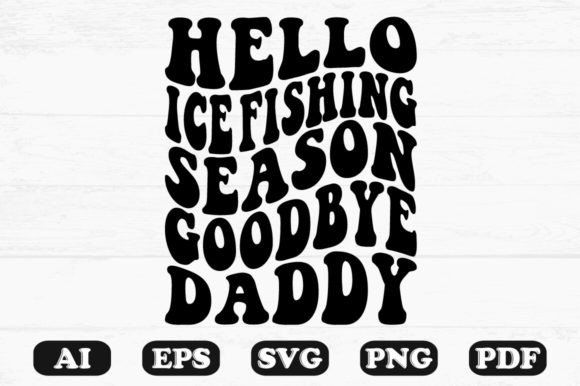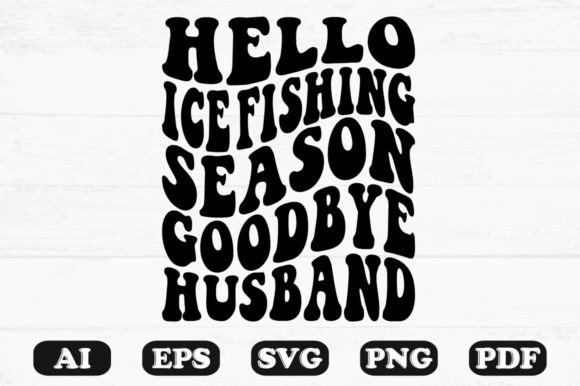
Hello Ice Fishing Season Goodbye Girlfri Review
I have spent years reviewing embroidery files for both personal hobbies and commercial ventures, so I know that the difference between a design that looks great on a screen and one that stitches beautifully is often in the details. When I first encountered Hello Ice Fishing Season Goodbye Girlfri, my initial reaction was a mix of amusement and practical curiosity. The phrase itself carries a specific cultural weight—it taps directly into the humor of winter sports enthusiasts who would rather be on the ice than at a social gathering. But as an experienced designer, my mind immediately shifted to how this text translates into thread.
The product falls under the Crafts category with a focus on Graphics, specifically offering retro wavy SVG assets. While these are primarily cutting files, the visual language suggests a strong potential for machine embroidery if handled correctly. The "Retro Wavy" style implies a vintage aesthetic that has been trending heavily in the handmade market. However, before I commit to using it on a client's custom sweatshirt or a boutique tote bag, I need to evaluate its structural integrity and visual appeal in a real-world scenario.
First Impressions: Mood and Visual Personality
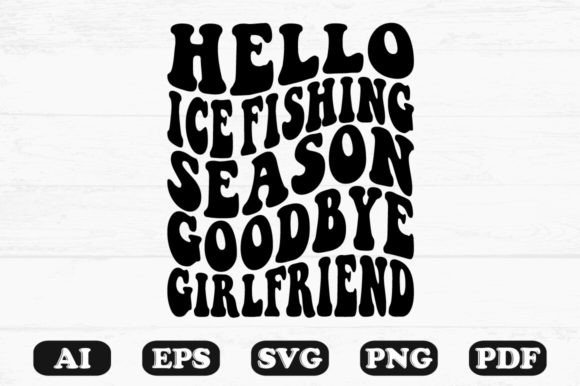
The immediate mood created by Hello Ice Fishing Season Goodbye Girlfri is nostalgic yet irreverent. The wavy typography suggests a 1970s vibe, which pairs perfectly with the theme of ice fishing—a pastime often associated with old-school gear and patience. In a design context, this combination feels authentic rather than forced. It doesn't scream for attention; instead, it invites a smile from those who understand the struggle of balancing outdoor passions with relationship obligations.
Visually, the layout relies heavily on the flow of the letters. The wavy nature of the font means that the design will likely curve across the fabric, creating a dynamic movement that flat, blocky fonts lack. This is excellent for apparel where you want the design to follow the contours of the body or the drape of a garment. However, this curvature presents a specific challenge for stitch density. If the waves are too tight, the threads might crowd each other, leading to a muddy appearance after stitching. Conversely, if they are too loose, the design might lose its retro charm and look disjointed. The balance here is critical for maintaining the professional look required for small business merchandise.
Real-World Application: A Case Study
To truly test the viability of this design, let's imagine a practical project. I am preparing a custom embroidered apron for a local craft fair booth owner who specializes in winter-themed gifts. She wants a limited run of aprons featuring Hello Ice Fishing Season Goodbye Girlfri to sell during the holiday season. The goal is to create a piece that is durable enough for kitchen use but stylish enough to catch the eye of passersby.
In this scenario, the retro wavy style works exceptionally well on a heavy cotton canvas apron. The texture of the fabric provides enough stability to hold the intricate curves of the lettering without puckering. I envision placing the design on the chest area, slightly arched to mimic the shape of the torso. The contrast between the dark denim background of the apron and light-colored thread (perhaps a cream or icy blue) would make the wavy lines pop, emphasizing the vintage feel.
However, the success of this project depends entirely on how the text handles the transition from digital to physical. If the design includes fine serifs or sharp corners within the wavy letters, those areas might become difficult to stitch cleanly on a curved surface like an apron bib. I would need to ensure that the thread colors chosen provide enough contrast to define the waviness clearly. A low-contrast color scheme, such as grey on black, might cause the design to disappear once stitched, ruining the visual impact intended by the original graphic.
Where to Use Carefully
While Hello Ice Fishing Season Goodbye Girlfri has broad appeal, there are specific contexts where it requires caution. Small hoop sizes are a primary concern. If you attempt to digitize this design for a tiny patch or a baby item, the wavy curves may become distorted. The letters could lose their legibility, turning into abstract shapes that confuse the viewer. For baby clothes, where clarity and safety are paramount, this design might be too complex unless simplified significantly.
Stretchy fabrics present another hurdle. The wavy lines rely on consistent spacing to maintain their rhythm. On a stretchy knit fabric like a standard t-shirt or a hoodie, the tension of the material can pull the stitches out of alignment, causing the waves to look uneven or rippled. To mitigate this, proper stabilizer selection is non-negotiable. Without a heavy-duty cut-away stabilizer beneath the design, the fabric might pucker around the dense stitch areas, particularly where the letters overlap or curve sharply.
Detailed corners and tiny lettering are also red flags. If the design features small decorative elements or very thin strokes within the retro font, these details may not hold up well after repeated washing. Embroidery is a tactile medium, and fine lines tend to fill in over time, especially with satin stitch. If the design is intended for commercial products that will see heavy use, such as workwear or frequently washed towels, the longevity of these details must be verified. Additionally, curved surfaces like caps require careful testing. The wavy text might not lay flat against the crown of a hat, leading to gaps in the stitching or an unnatural distortion of the message.
Impact on Brand and Customer Trust
In the world of Etsy sellers and creative entrepreneurs, the quality of your finished product directly influences customer trust. A design like Hello Ice Fishing Season Goodbye Girlfri can elevate a simple gift item into a statement piece, but only if executed flawlessly. Poor stitching, visible gaps, or misaligned curves can make a handmade product look cheap, regardless of the sentiment behind the quote.
When used effectively, this design enhances the perceived value of the item. The retro aesthetic appeals to buyers looking for unique, personalized gifts that stand out from mass-produced items. It signals that the maker put thought into the design choice, not just the placement. For boutique branding, consistency is key. If this wavy style becomes part of your signature look, customers will begin to recognize it instantly, building brand loyalty. However, if the execution varies from project to project, the brand identity suffers.
Furthermore, the emotional resonance of the phrase adds a layer of engagement. Customers buying this design are likely doing so because they relate to the humor. A high-quality embroidery job reinforces that connection, making the recipient feel valued. Conversely, a sloppy finish can undermine the sentiment, making the gift seem careless.
Practical Designer Notes for Execution
Before integrating Hello Ice Fishing Season Goodbye Girlfri into your next production run, consider these essential steps:
- Test on scrap fabric: Always run a test stitch on a piece of the same material you plan to use. This reveals issues with tension, puckering, or thread breakage before you commit to the final product.
- Check thread color contrast: Ensure the thread colors selected provide sufficient contrast against the fabric. Test in both natural light and artificial light to see how the wavy lines appear.
- Review stitch density: High-density areas in the curves can lead to needle deflection. Adjust the density settings if necessary to prevent the fabric from bunching up.
- Confirm hoop size: Verify that your machine's hoop can accommodate the full width of the design without cropping the edges. The wavy nature might require a larger horizontal space than standard text.
- Inspect small details: Zoom in on the digital file to check for any tiny, fragile elements that might not stitch well. Consider simplifying these if they are too delicate.
- Use proper stabilizer: Match the stabilizer to the fabric weight. Heavy stabilizers are usually needed for wavy designs to support the tension of the stitches.
- Check licensing: Confirm whether the design allows for commercial use. Many digital graphics come with restrictions on selling finished items, and violating these terms can lead to legal issues for small shop owners.
Ultimately, Hello Ice Fishing Season Goodbye Girlfri offers a fun, relatable concept that fits well within the current trends of retro and hobbyist aesthetics. Whether you are creating a custom sweatshirt, a holiday gift, or a piece of nursery decor, the key lies in respecting the technical limitations of embroidery. By approaching the design with a critical eye and rigorous testing, you can transform a simple SVG file into a stunning, high-value finished product that resonates with your audience.